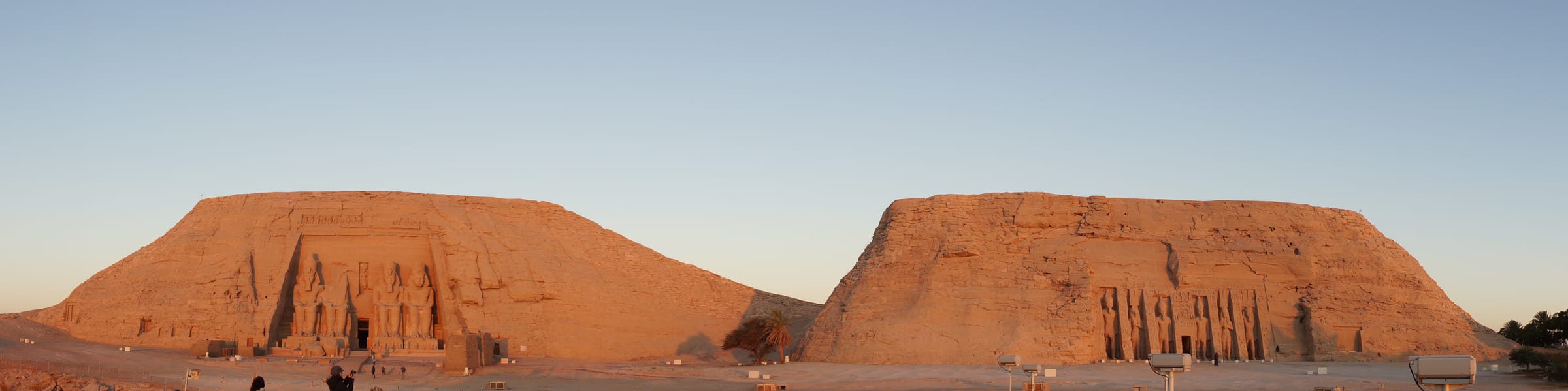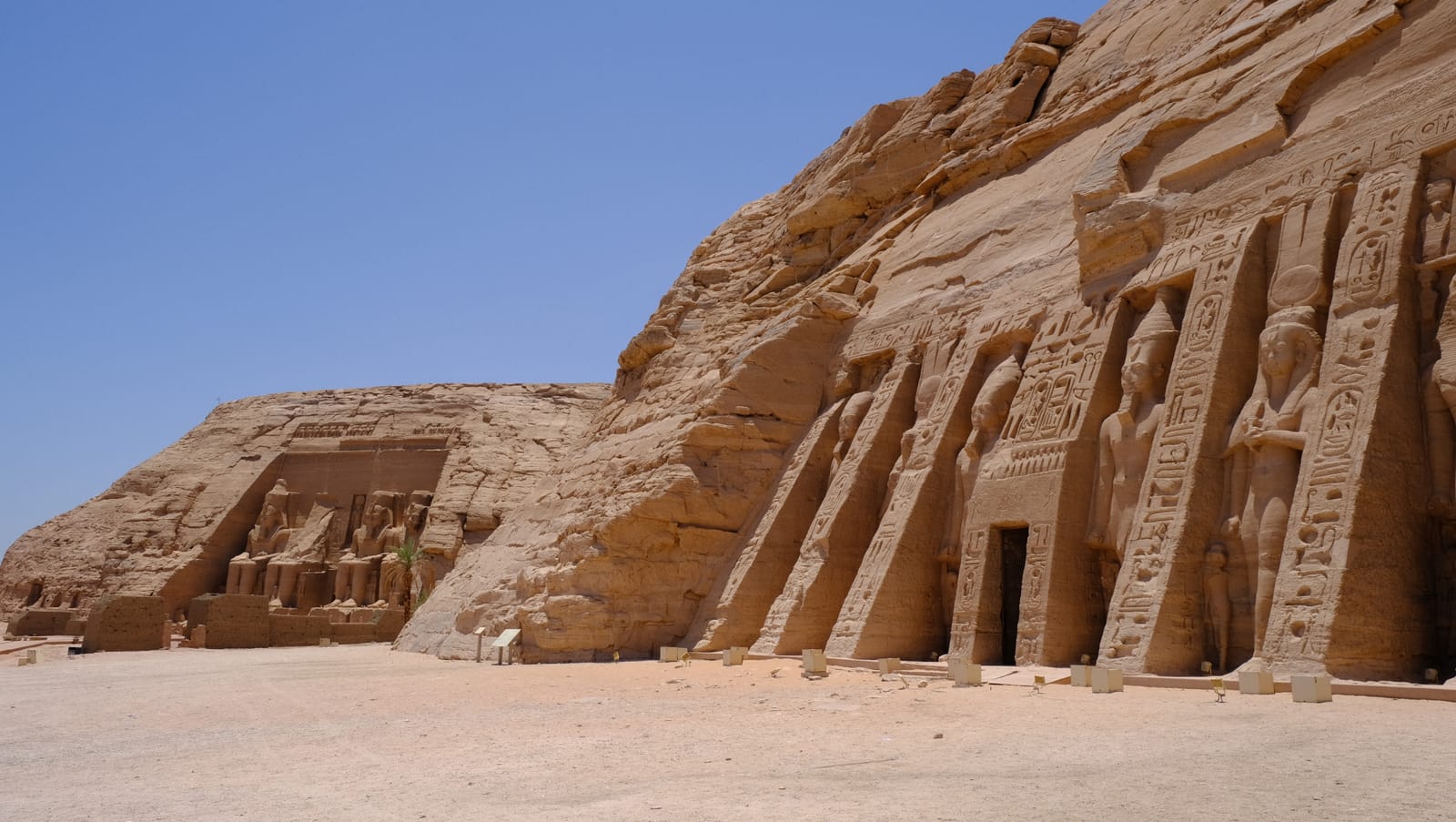
Abu Simbel has one of the most extreme climates of any major monument on earth: hyper-arid, effectively rainless, and blisteringly hot for half the year. The good news is that the calendar makes the decision easy — November to February is the answer for almost everyone, with two specific dates worth planning a whole trip around.
Abu Simbel season by season
November – February (winter)
The best time to go
Daytime highs of roughly 23–27°C, cool clear mornings, deep blue lake and comfortable walking conditions. This is peak season, so tours and hotels fill up, but the site is manageable and the light is at its best. Nights drop to around 8–12°C — take a layer for the pre-dawn departure.
March & October (shoulder)
Warm, quieter, still excellent
Highs around 30–35°C: hot by European standards but entirely workable if you are at the temples early. Fewer visitors than midwinter and lower prices. March can bring the khamsin, a hot sand-laden wind that hazes the air for a day or two at a time.
April & May
Getting serious
Highs climb from the mid-30s into the low 40s. Perfectly possible with an early start, plenty of water and no expectation of standing around in the sun, but not a season for lingering. The site is noticeably quieter.
June – September (summer)
Only if you have no choice
Daily highs of 40–45°C and occasionally higher, with almost no shade anywhere on site. Tours still run, and going at first light works — but this is genuinely punishing weather and not suitable for young children or anyone who struggles with heat. The upside: the lowest prices and the emptiest temples of the year.
Quick recommendations
- Best overall: November to February — comfortable temperatures, clear air and the best photographic light.
- Best value: October and March — nearly the same conditions, noticeably fewer people, cheaper tours and rooms.
- For the Sun Festival: 22 February or 22 October, booked months in advance.
- For empty temples: late May to September, if you can handle the heat and start at opening.
- Avoid: midday between April and September, in any month, at any cost.
The two dates that matter: the Sun Festival
On 22 February and 22 October the rising sun sends a shaft of light 60 metres down the temple axis and illuminates three of the four gods in the sanctuary. It is the reason the temple faces the way it does, and it survived the 1960s relocation intact. Both mornings are treated as a national festival, with crowds gathering from about 04:00 and Nubian music and dancing afterwards. Hotels in Abu Simbel and flights from Aswan sell out months in advance for both dates — if you want to be there, book before anything else.
Read the the Sun Festival guide →