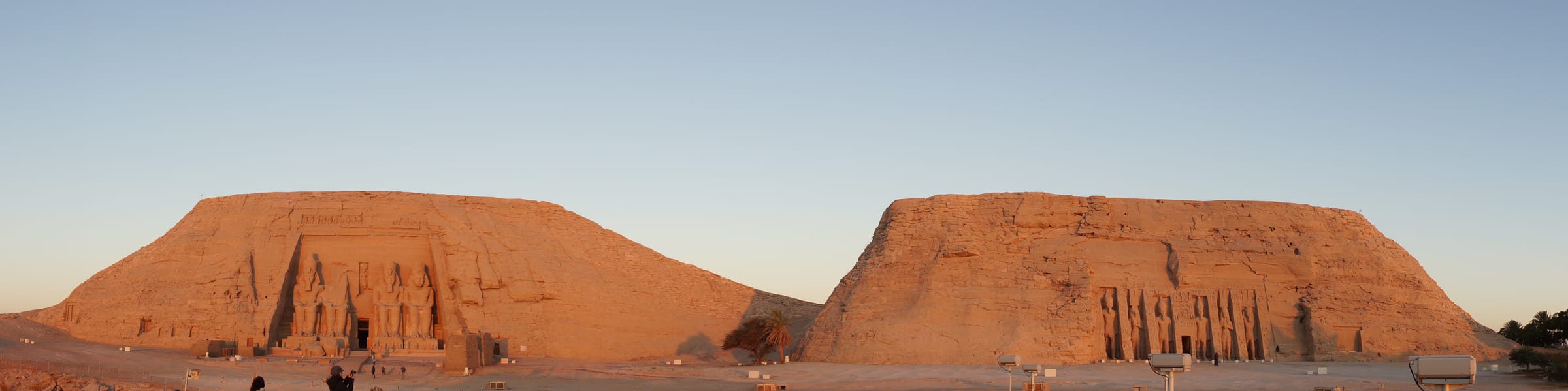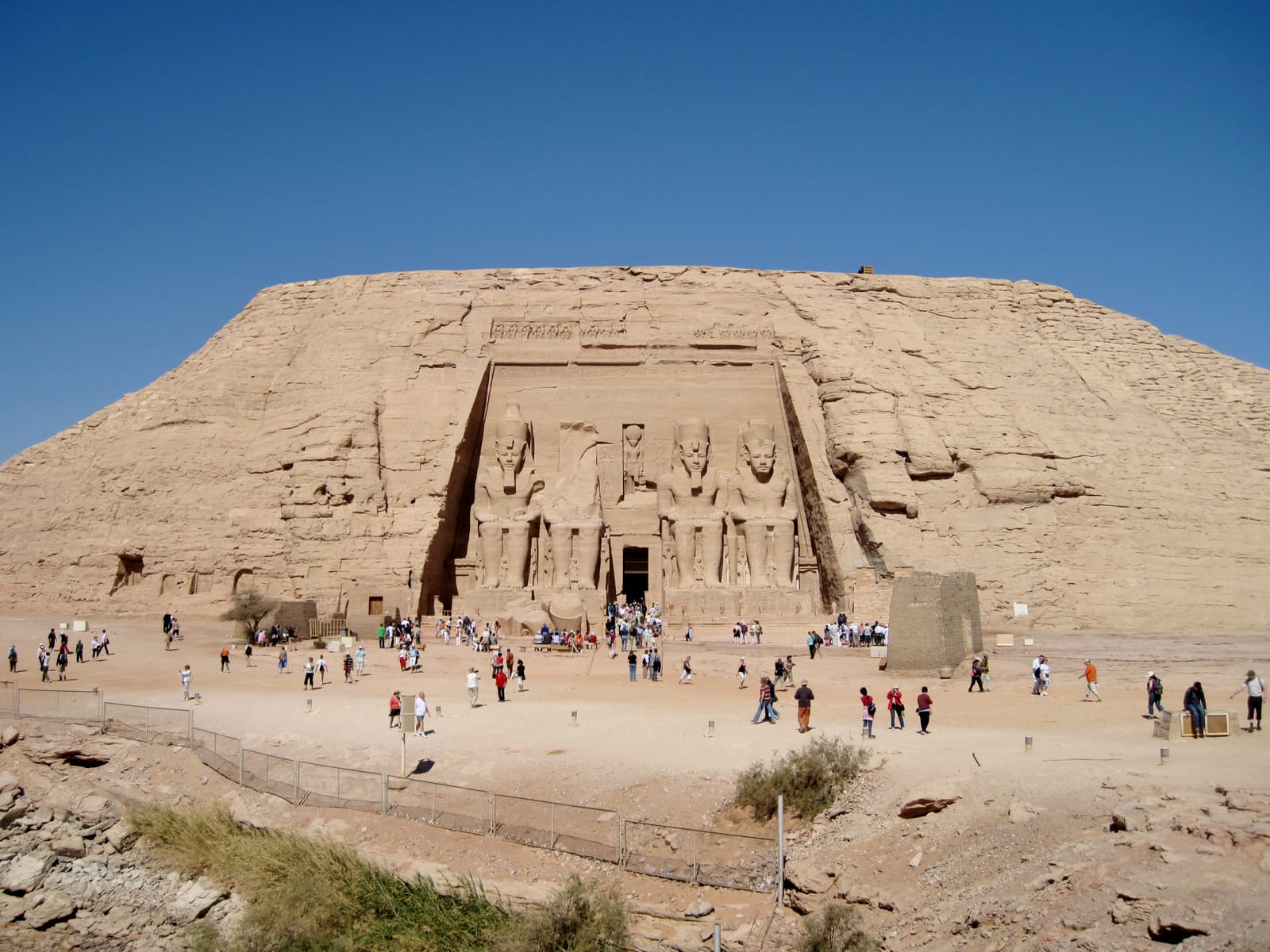
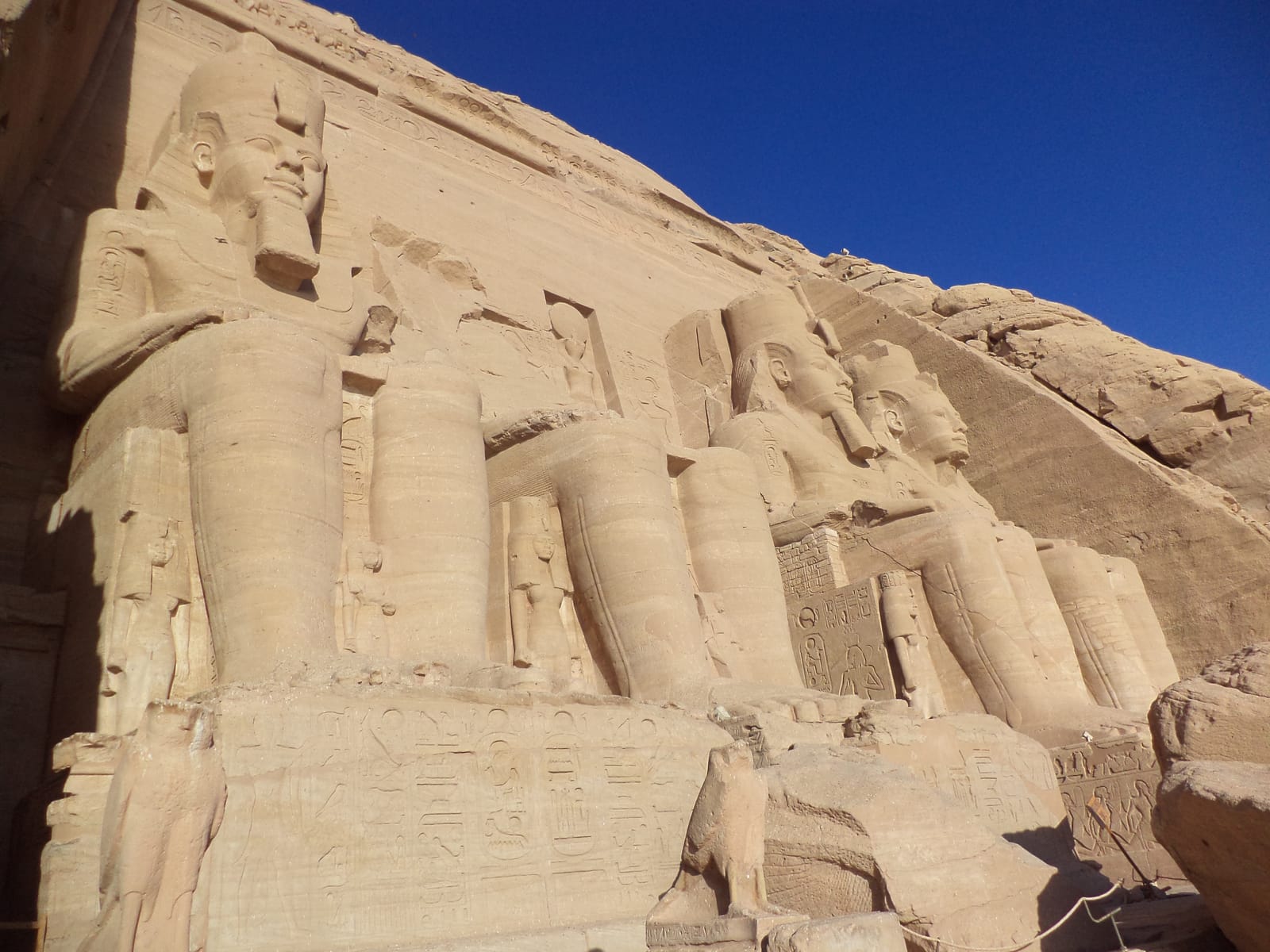
Nothing prepares you for the scale. Four seated figures of Ramesses II, each about 20 metres high, sit shoulder to shoulder across a facade 33 metres wide and 30 metres tall, cut straight out of a sandstone cliff above Lake Nasser. Built between roughly 1264 and 1244 BC, the Great Temple was propaganda on a geological scale — a message to anyone sailing up from Nubia about exactly whose kingdom this was.
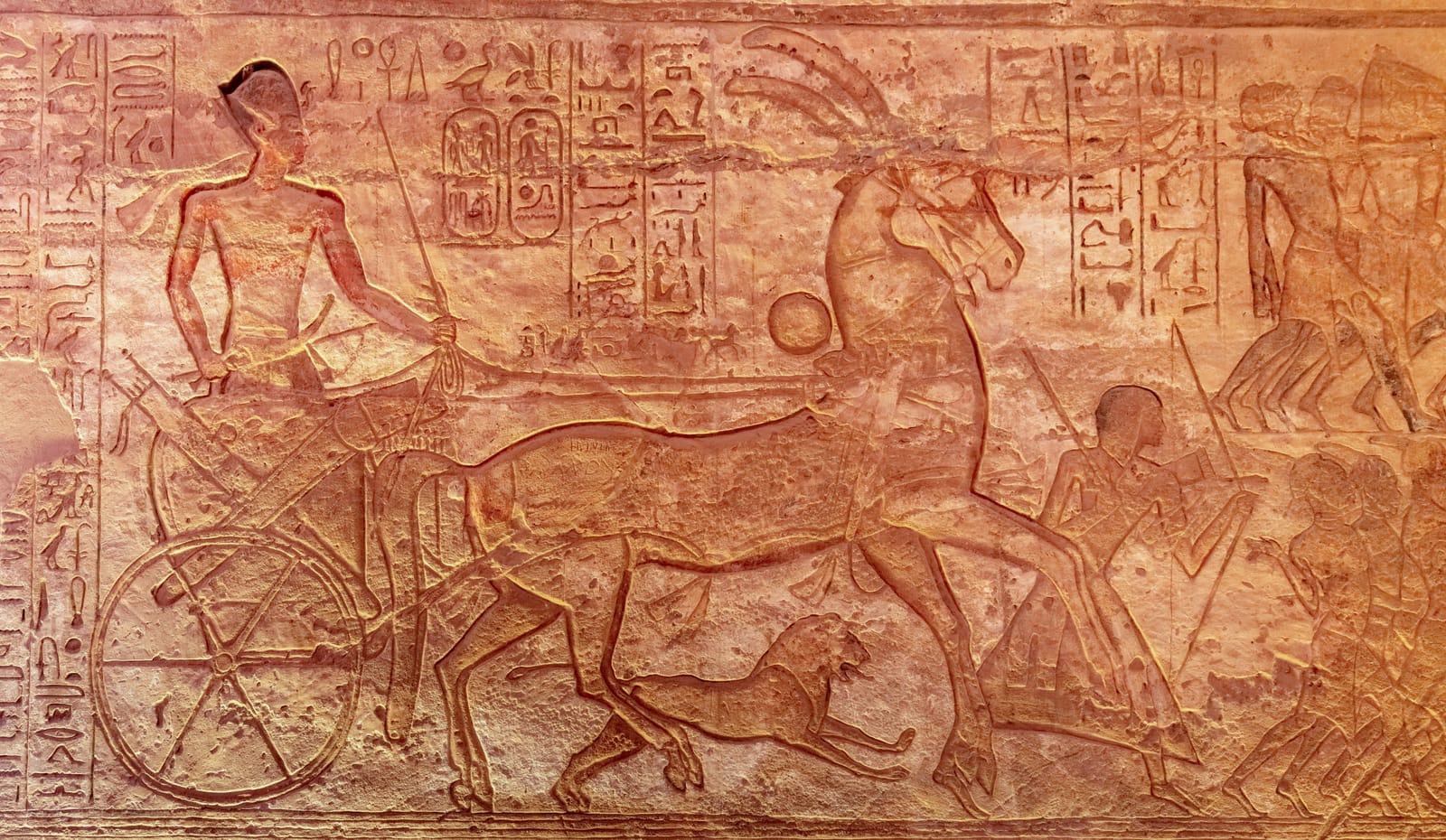
Inside, the temple runs 60 metres back into the rock. Eight Osiride pillars of the king line the great hall; the walls carry the largest surviving depiction of the Battle of Kadesh, in which Ramesses declares a decisive victory over the Hittites that was, in reality, closer to a draw. At the very end sit four statues in the dark: Ptah, Amun-Re, the deified Ramesses and Ra-Horakhty — the sanctuary that the sun reaches twice a year.
Top things to do at Great Temple of Ramesses II
Walk the curve of the approach path
The path deliberately hides the temple until the last moment, then delivers the whole facade at once. Do not look at photos on your phone as you walk; let the corner do its work.
Find the earthquake-damaged colossus
The second statue from the left lost its head and torso in an earthquake around 27 BC. When the temple was moved in the 1960s the engineers deliberately left the fallen pieces where they had fallen — a small act of honesty in an otherwise total reconstruction.
Read the Battle of Kadesh wall
The north wall of the hypostyle hall is a comic strip in stone: the Egyptian camp, the Hittite ambush, Ramesses alone in his chariot. It is the best-preserved battle narrative in Egypt.
Look for the Greek graffiti
On the left leg of one colossus, Greek mercenaries serving Psamtik II scratched their names in the 6th century BC — one of the oldest pieces of tourist graffiti in the world.
Step into the sanctuary
Sixty metres from daylight, four gods sit in near-darkness. Stand at the doorway and look back along the axis to understand exactly what the sun does on 22 February and 22 October.
How to get to Great Temple of Ramesses II
- From Aswan by road: about 280 km, roughly 3 to 3.5 hours each way on a good desert highway. Almost every visitor arrives this way, on an organised day trip with hotel pickup.
- From Aswan by air: EgyptAir flies the short hop in about 45 minutes; the airport is 15 minutes from the temple gate, making a half-day visit possible.
- From Luxor or Cairo: possible as a very long private day trip from Luxor, or with a flight to Aswan from Cairo. Both are covered on our tours page.
- The site opens early — most tours aim to arrive between 07:00 and 09:00, when the facade is in full sun and the air is still bearable.
- Both temples share one ticket, bought at the visitor centre; guided tours frequently include it, so check before you pay twice. Prices are revised most years.
- Photography inside the temples usually requires an extra photo ticket, and tripods are not permitted. Buy it at the gate if you want interior shots.
- There is very little shade on the approach. Hat, water and sunscreen are not optional between April and October.
Best tours & tickets for Great Temple of Ramesses II
These top-rated experiences are the easiest way to see Great Temple of Ramesses II:
 Day trip from $40
 From Aswan: Abu Simbel Temple Day Trip with Hotel Pickup
The single most-booked way to see Abu Simbel, and the reason most travellers can do it without hiring a car. A modern minibus collects you from your Aswan hotel in the small hours, crosses 280 km of open desert on the newly resurfaced road, and drops you at the temple gate with around two hours to explore. That is comfortably enough for the Great Temple of Ramesses II, Nefertari’s Temple of Hathor next door and the domed rooms explaining the UNESCO rescue. With more than 3,000 reviews it is also the most road-tested option on the list.
- Hotel pickup and drop-off anywhere in Aswan
- Air-conditioned transfer across the Western Desert to Abu Simbel
- About 2 hours at the temples — enough for both the Great and Small Temple
 Guided day tour from $145
 From Aswan: Abu Simbel Temple Complex Day Tour
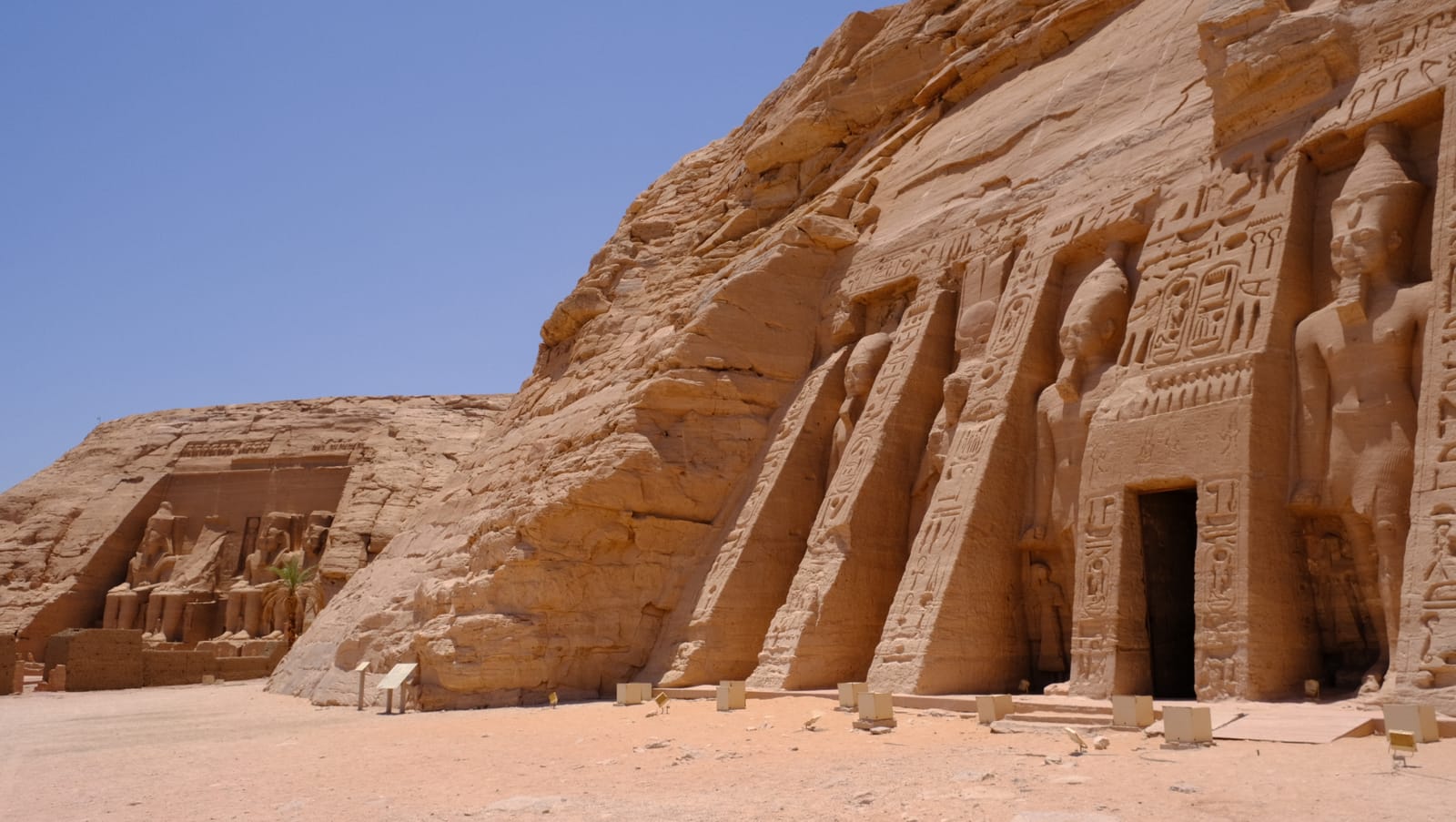
A straightforward, hassle-free way to see the whole complex rather than just the famous facade. The tour treats Abu Simbel as two monuments plus a story: the Great Temple with its 20-metre colossi and Kadesh battle reliefs, the Small Temple where Nefertari appears the same height as her husband — almost unheard of in Egyptian art — and the artificial mountain that hides the concrete domes built to hold both temples up after they were moved in the 1960s.
- Both temples covered — Ramesses II and Nefertari
- Guided storytelling on the Battle of Kadesh reliefs
- Comfortable air-conditioned road transfer from Aswan
 Private day tour from $145
 Best Private Day Trip to Abu Simbel from Aswan
The pick of the private options, and the one reviewers keep singling out for its guides. Because it runs on a civilised daytime schedule rather than the traditional pre-dawn convoy, you reach Abu Simbel after the first wave of group tours has left — the sanctuary is quieter and the light on the facade is dramatic. Your guide explains the history in the air-conditioned van on the way, so your time at the temples is spent looking rather than listening. Several reviewers mention a lakeside lunch of fresh Lake Nasser fish.
- Private vehicle and private local guide — you set the pace
- Skip-the-line entry so you are inside while the coaches queue
- Guides speaking English, Spanish, German and Arabic