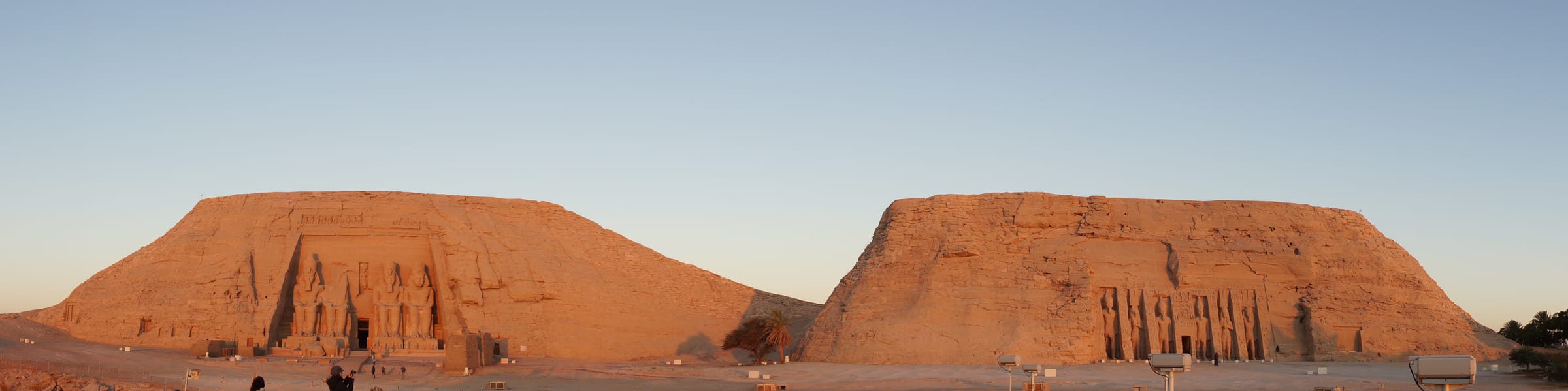
Abu Simbel is a village, an airport and two temples on the west bank of Lake Nasser, 280 km southwest of Aswan and 40 km north of Sudan. It is remote, it is hot, and it is worth every hour of the journey.
What Abu Simbel actually is
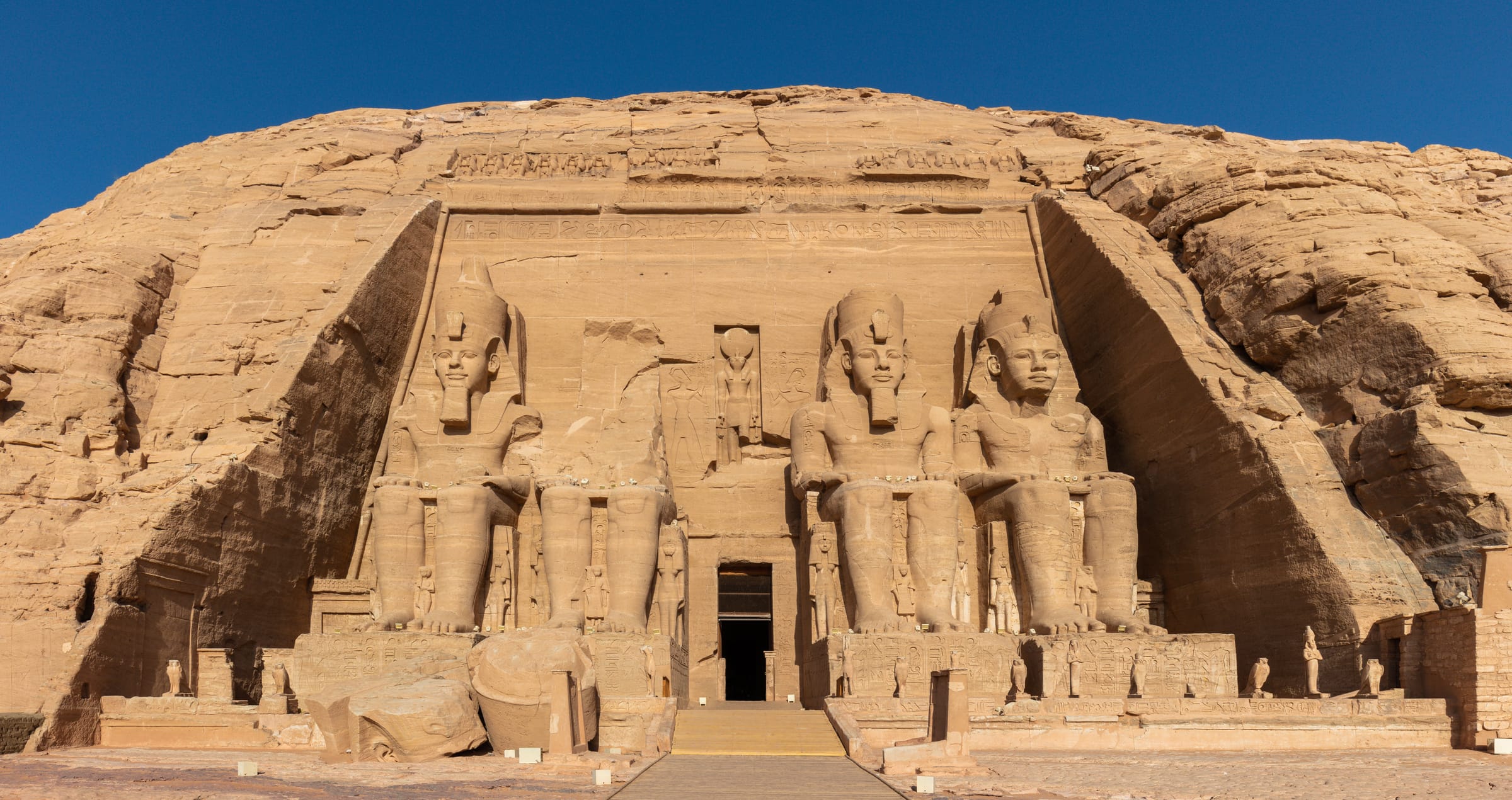
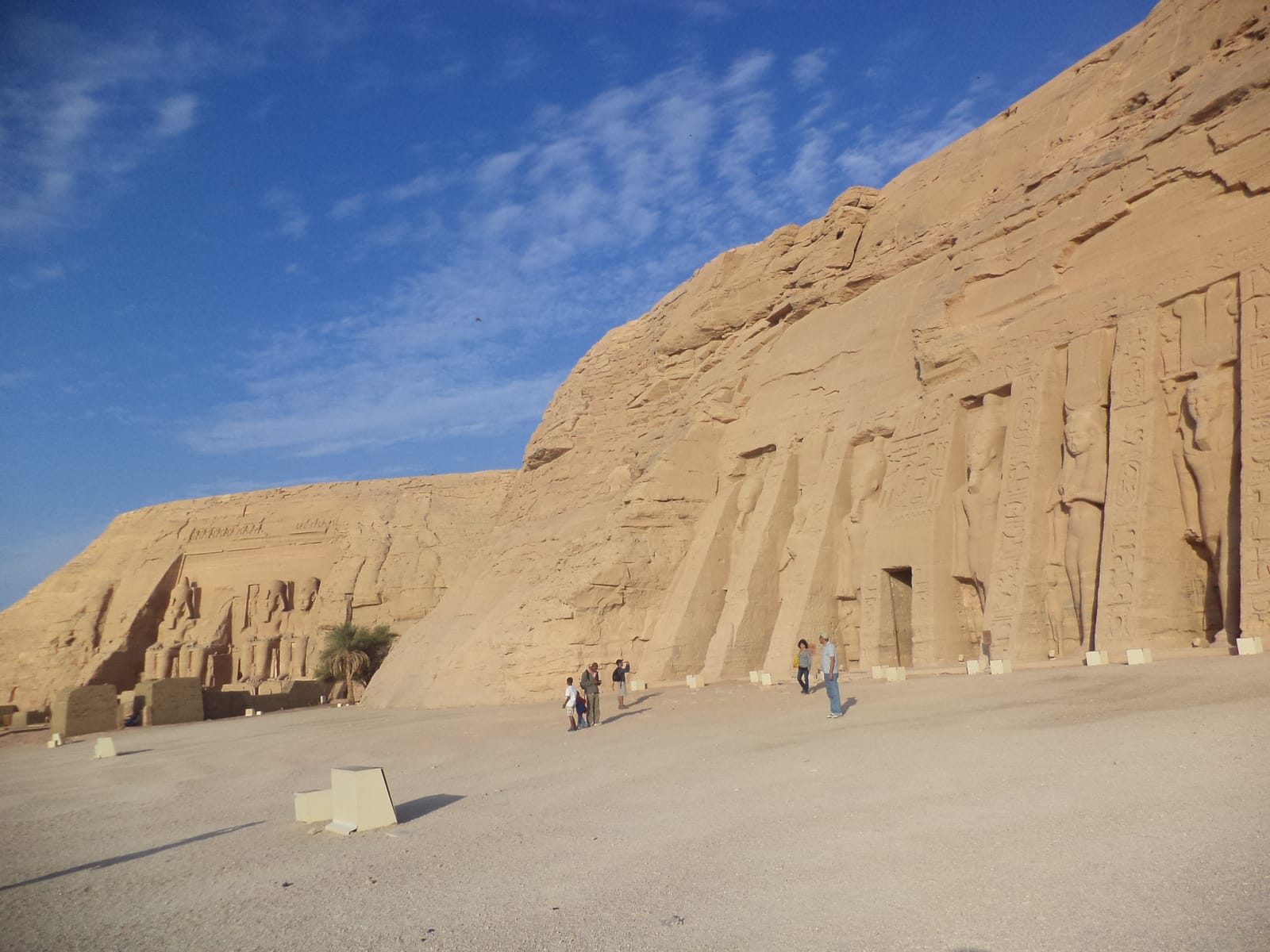
Two rock-cut temples, built between roughly 1264 and 1244 BC on the orders of Ramesses II. The Great Temple is dedicated to Amun-Re, Ra-Horakhty, Ptah and to Ramesses himself as a god; its facade carries four seated colossi about 20 metres high. The Small Temple, a hundred metres north, honours the goddess Hathor and Ramesses’ queen Nefertari, who appears on the facade at the same height as the king — almost unheard of in Egyptian art.
They stood at the southern frontier of Egypt, facing the direction from which Nubian traffic came. The message was not subtle.
The story that makes it extraordinary
The temples were lost under sand for centuries. The Swiss traveller Johann Ludwig Burckhardt spotted the tops of the colossi in 1813; Giovanni Belzoni dug his way into the Great Temple four years later.
Then, in the 1960s, the Aswan High Dam threatened to drown them. Between 1964 and 1968 a UNESCO-led international campaign cut the entire complex into more than a thousand numbered blocks — some weighing 30 tonnes — and rebuilt it 65 metres higher and 200 metres back from the water, inside two concrete domes hidden under an artificial hill. The orientation was reproduced so precisely that the twice-yearly solar alignment still works, shifted by roughly a day.
The must-see sights
 The two temples
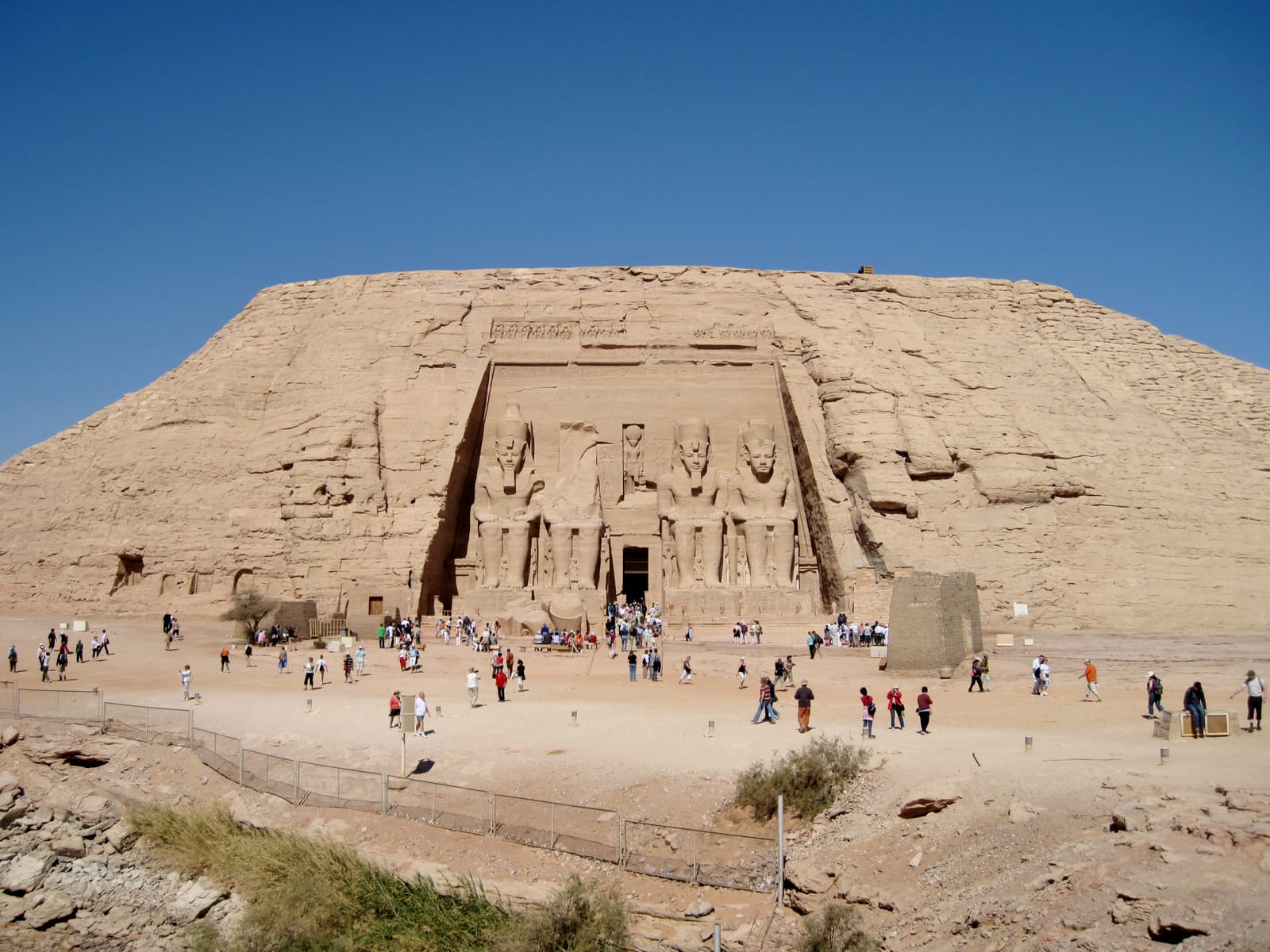
 Great Temple of Ramesses II
Four colossi, one enormous ego
The most famous rock-cut monument on earth: a 33-metre-wide facade guarded by four seated statues of Ramesses II, each some 20 metres tall, opening into halls carved 60 metres into the sandstone cliff.
 The two temples
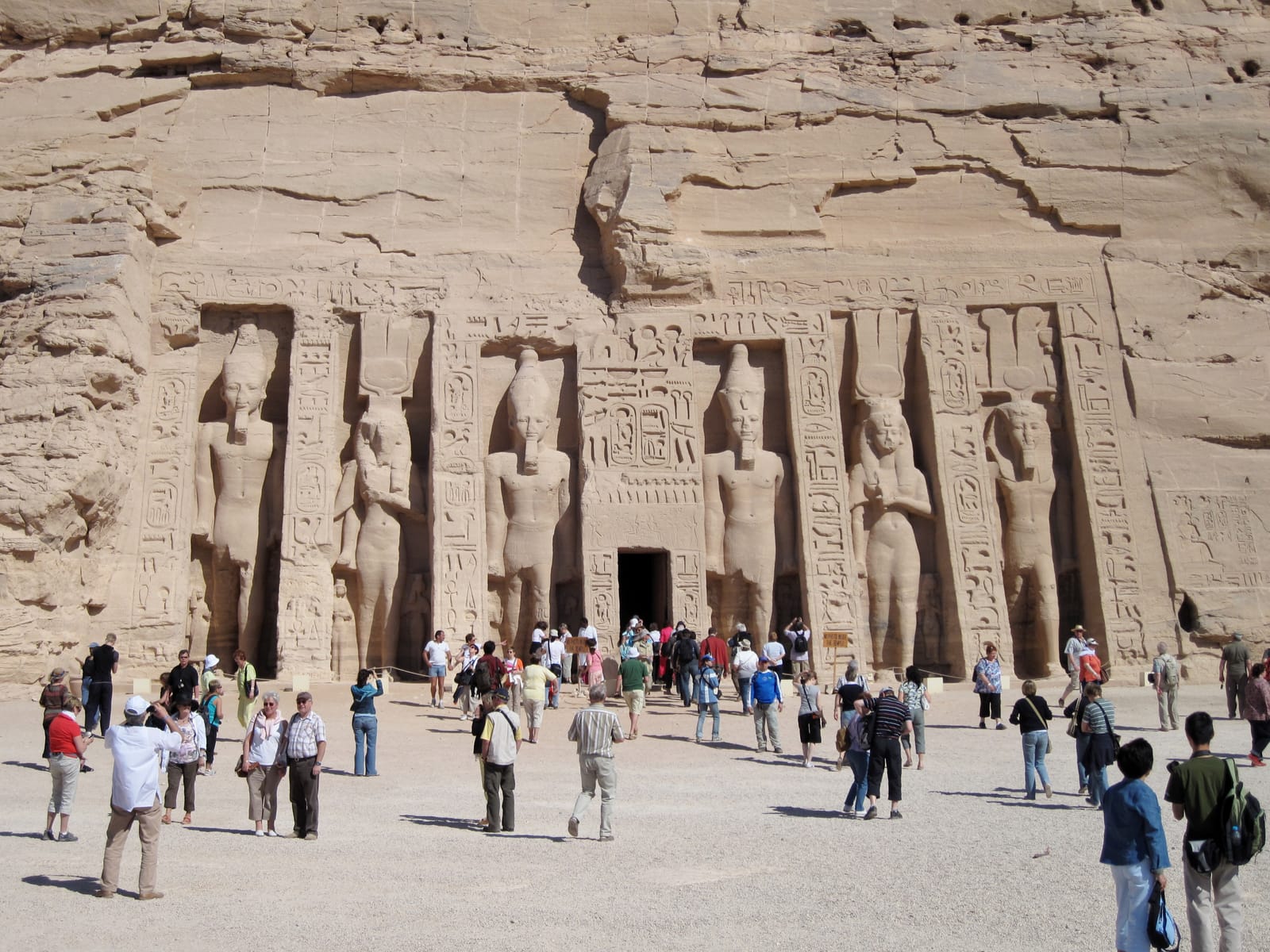
 Temple of Hathor & Nefertari
The queen carved as an equal
The Small Temple, 100 metres north of its giant neighbour, was dedicated to Hathor and to Ramesses’ favourite wife Nefertari — who appears on the facade at the same height as the king, almost unique in Egyptian art.
 Experiences & events
 Abu Simbel Sun Festival
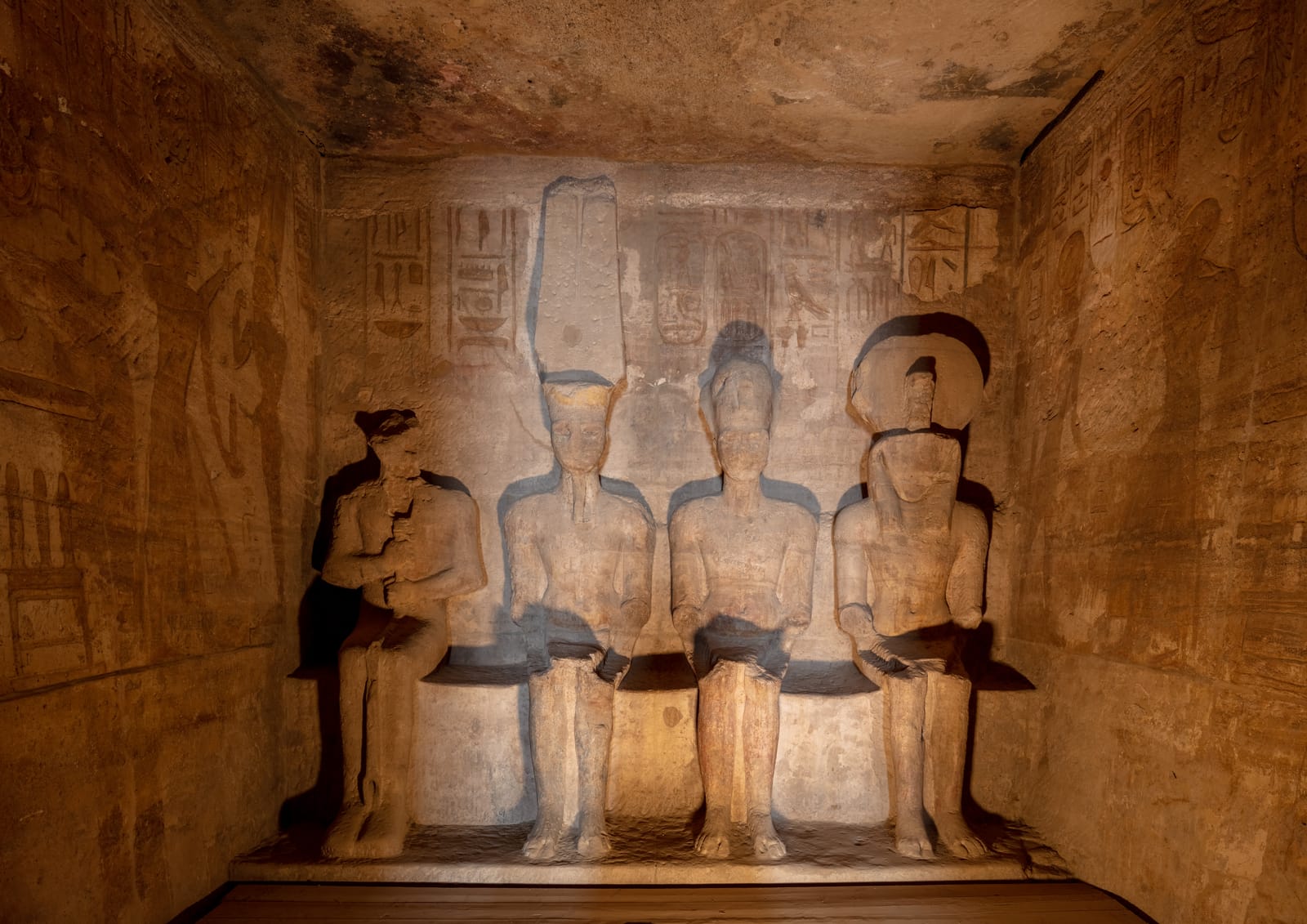
When the sun walks into the sanctuary
Twice a year — on 22 February and 22 October — the rising sun drives a shaft of light 60 metres through the Great Temple to illuminate three of the four gods in the innermost sanctuary. Egypt turns it into an all-night festival.
 Experiences & events
 Sound & Light Show
The facade after dark
After sunset the temples are floodlit and a projected show tells the story of Ramesses, Nefertari and the rescue, narrated in multiple languages through headsets. It is the reason to stay the night rather than bus straight back to Aswan.
Tickets, opening hours and practicalities
One ticket covers both temples and is bought at the visitor centre; guided tours often include it. There is a separate photography ticket for interior shots, and tripods are not permitted. The site opens early — roughly from 05:00 or 06:00 depending on the season — and closes in the late afternoon. Prices are revised most years, so treat any figure you read online, including ours, as a guide rather than a quote.
What to bring
- Water — more than you think. There is a shop at the visitor centre but nothing on the approach path.
- A hat, sunglasses and high-factor sunscreen. There is essentially no shade on site.
- Cash in Egyptian pounds for tickets, the photo ticket, tips and the shop.
- A warm layer if you are on a pre-dawn departure — the desert is genuinely cold before sunrise.
- Comfortable shoes; the site is flat but the walk from the car park and around the hill takes a while.
Eating and sleeping
There is a café at the visitor centre and a handful of restaurants and guesthouses in the village, several of which cook excellent Nubian food — grilled Lake Nasser perch, slow-cooked tagines, hibiscus karkadeh. If you are on a day trip from Aswan you will probably eat on the road. If you are staying, see our where to stay in Abu Simbel guide.
Money, tipping and etiquette
Egypt runs on cash and on baksheesh — small tips for small services. Carry low-denomination notes for guardians, drivers and anyone who helps you. Card acceptance in Abu Simbel is limited to the larger hotels. This is a conservative Nubian town, so modest dress away from hotel pools is appreciated.
A suggested plan
- Half a day: fly from Aswan, see both temples with a guide, fly back. Six hours door to door.
- One day: the classic road trip from Aswan. Ten hours, two hours on site, back for dinner.
- Two days: drive down in the afternoon, see the site late and again at opening, with the Sound and Light show in between. The best version of this trip.
- A week: a Lake Nasser cruise from Aswan, taking in Kalabsha, Wadi es-Sebua and Amada on the way.
Common mistakes
- Arriving at midday between April and September. Don’t.
- Assuming the entry ticket is included in your tour — check the listing.
- Rushing past the Small Temple. It is the one most people end up preferring.
- Booking the Sun Festival late. There are only a few hundred beds in the whole town.